
Randolph County Criminal Court Records
A criminal court record is the case file the court keeps once criminal allegations are filed or transferred into court. In Randolph County, felony criminal cases belong in Superior Court, which is part of the Pataula Judicial Circuit. Magistrate Court often appears earlier in the same event chain because it handles arrest warrants, search warrants, first appearances, bonds, and preliminary hearings. Probate Court or Municipal Court may handle some misdemeanor or traffic matters depending on the citation and jurisdiction.
The Clerk of Superior Court is the local custodian for Randolph Superior criminal court records. GSCCCA identifies Kay Arnold-Goss as Clerk of Superior Court, and the Pataula Judicial Circuit clerk list gives 93 Front Street, P.O. Box 98, Cuthbert, GA 39840, phone 229-732-2216, fax 229-732-5881, and kay.arnold@gsccca.org. For charge detail alone, use the arrest and charge page. For the full case file, disposition, and sentence, stay with the criminal court record.
Search Randolph County Criminal Court Records
Georgia Courts e-access lists Randolph Superior under PeachCourt. The e-access page states that users are redirected to a provider website and must have an account to search court records. PeachCourt's public landing identifies it as a Georgia document access and electronic filing portal for civil and criminal court documents, but Randolph-specific search fields and sample criminal results were not inspectable without account access during research.
- Confirm that the case is a court case, not only an arrest, jail, or sheriff incident record.
- Start with Georgia Courts e-access and follow the Randolph Superior provider route to PeachCourt.
- Search by defendant name, case number, court type, and date range if the provider account offers those fields.
- Read the docket for charges, hearings, motions, pleas, disposition, and sentencing entries.
- Request certified copies from the Clerk of Superior Court when an official record is needed.
The GBI record restrictions page is not a Randolph case search, but it explains how Georgia criminal-history restriction works after eligible arrests or prosecutions.
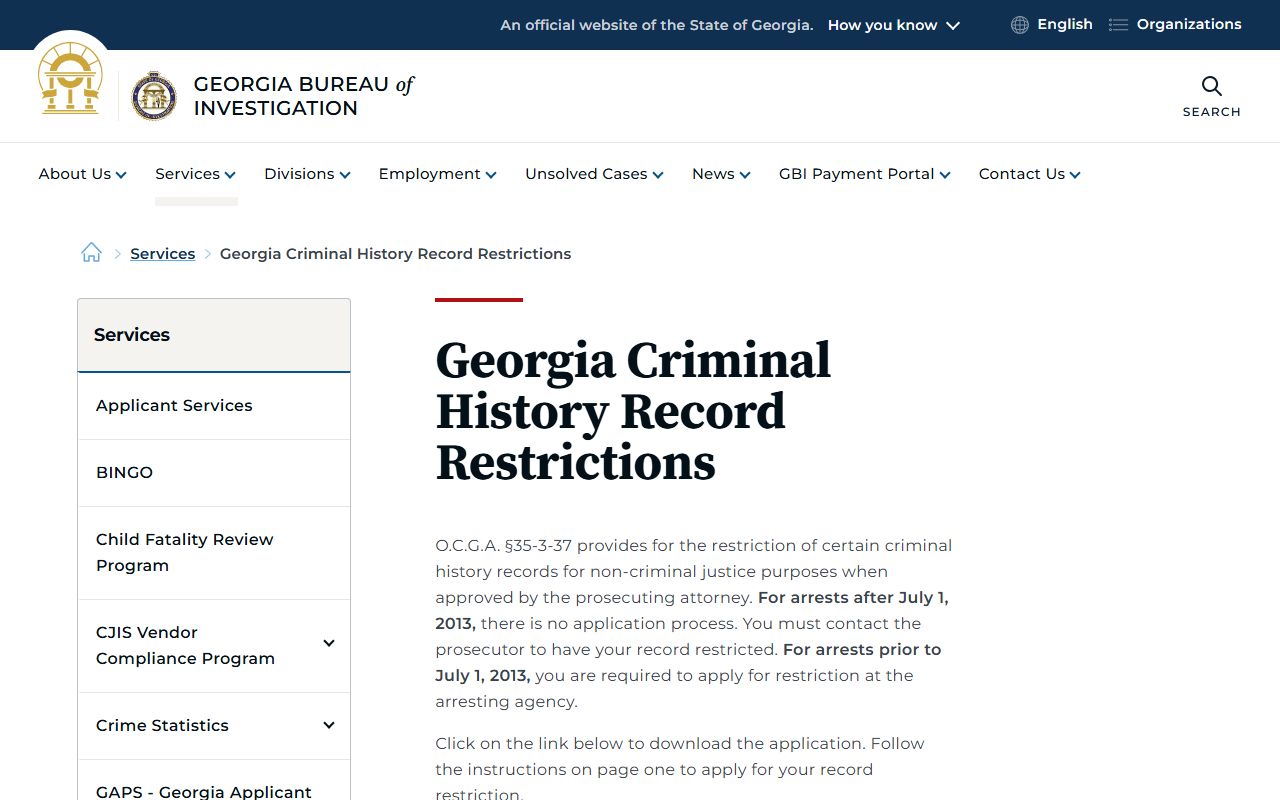
Use GBI restriction guidance after identifying the court case and prosecutor route, not as a substitute for the Randolph criminal court record.
Randolph County Criminal Case Flow
A criminal case can start with an arrest, warrant, or accusation, but the court record becomes most useful when it tracks the legal steps after filing. Magistrate Court may handle the first appearance and bond. The Pataula Judicial Circuit District Attorney decides felony prosecution filings such as indictment, accusation, plea offers, dismissals, and sentencing recommendations. The court docket then records each major event.
Case flow: Charges Filed › Arraignment › Pretrial / Motions › Plea or Trial › Disposition › Sentencing
| Stage | What Happens |
|---|---|
| Charges Filed | The prosecutor files or pursues formal charges through accusation, indictment, or other charging document. |
| Arraignment | The defendant is advised of the charges and enters a plea such as guilty, not guilty, or nolo contendere. |
| Pretrial / Motions | The parties file requests about evidence, procedure, bond, discovery, suppression, continuances, or dismissal. |
| Plea or Trial | The case resolves by plea, bench trial, jury trial, dismissal, or other disposition. |
| Sentencing | The court enters punishment or conditions such as custody, probation, fines, restitution, or other orders. |
What Randolph County Criminal Records Show
Because no public Randolph PeachCourt sample criminal case was visible without login, the field inventory below states expected criminal court record elements drawn from the research file and Georgia court practice. Do not assume that every public online view shows every field or image. A docket may show a filing event while the document itself is withheld, fee-based, sealed, or available only through the clerk.
| Field | What It Shows |
|---|---|
| Case Number | The court's criminal case identifier, with Randolph-specific format confirmed by the clerk if needed. |
| Defendant | The person charged in the court case. |
| Charges | The offenses alleged by indictment, accusation, complaint, or related charging document. |
| Bond / Warrant Events | Entries that may connect the case to Magistrate Court, sheriff service, or bench warrant activity. |
| Plea | The defendant's answer to a charge, such as guilty, not guilty, or nolo contendere. |
| Disposition | The result for a charge or case, such as dismissed, guilty plea, verdict, or dead docket where applicable. |
| Sentence | Custody, probation, fines, costs, restitution, conditions, or other punishment imposed after conviction. |
Randolph County Charges vs Convictions
A charge is an allegation. A conviction is a legal outcome after a guilty plea, guilty verdict, or other judgment of guilt. Randolph County criminal court records can show charges that were amended, reduced, dismissed, nolle prossed, or ended in acquittal. That is why a charge list alone should not be read as a conviction history.
| Charge | Conviction | |
|---|---|---|
| Record stage | Appears when the prosecutor or court files the allegation | Appears after plea, verdict, or judgment |
| Meaning | The state alleges an offense | The court has entered guilt or accepted a guilty plea |
| Possible outcomes | Pending, amended, reduced, dismissed, nolle prosequi, or tried | Sentence, probation, fine, restitution, or other judgment terms |
| Use with care | Should not be treated as proof of guilt | Still must be checked for appeal, restriction, or later order |
Read Randolph County Criminal Dispositions
Disposition language can be brief. Guilty means the court accepted guilt by plea or verdict. Not guilty means the charge was not proven at trial. Dismissed means the charge or case ended without that charge moving to conviction, but the reason may require the order or docket history. Nolo contendere means the defendant did not contest the charge, with consequences that depend on Georgia law and the case. A sentence entry may combine jail time, credit for time served, probation, fines, costs, restitution, community service, or special conditions.
Probation and sentencing entries may refer to offices outside the courthouse. The Pataula Circuit Public Defender represents eligible indigent defendants in certain criminal and juvenile matters, but it is not a records office. The Pataula Judicial Circuit District Attorney is the prosecution office for Superior Court criminal cases. Its records and victim-services contacts can explain prosecution-side status, but certified court copies still come from the clerk.
Restricted Randolph County Criminal Records
Georgia usually calls the process record restriction, not expungement. Restriction can limit public access for non-criminal-justice purposes in eligible cases. The GBI states that for arrests after July 1, 2013, the person contacts the prosecutor; for older arrests, the process may begin with the arresting agency. If the case is a conviction, dead docket, or special misdemeanor restriction request, a court petition and judge review may be needed.
| Sealed / Restricted | Expunged | |
|---|---|---|
| Georgia term | Record restriction is the common Georgia term | Often used casually, but Georgia law is more specific |
| Public access | Limited for eligible records after approval or court order | Do not assume a court file is destroyed |
| Who may still see it | Courts, law enforcement, prosecutors, and criminal justice agencies may retain access | Depends on the legal order and record type |
| Where to start | Prosecutor for many post-2013 arrests, arresting agency for many earlier arrests | Ask the court or qualified counsel before using the term |
The Georgia criminal history restriction statute is the core legal source for many restriction questions.
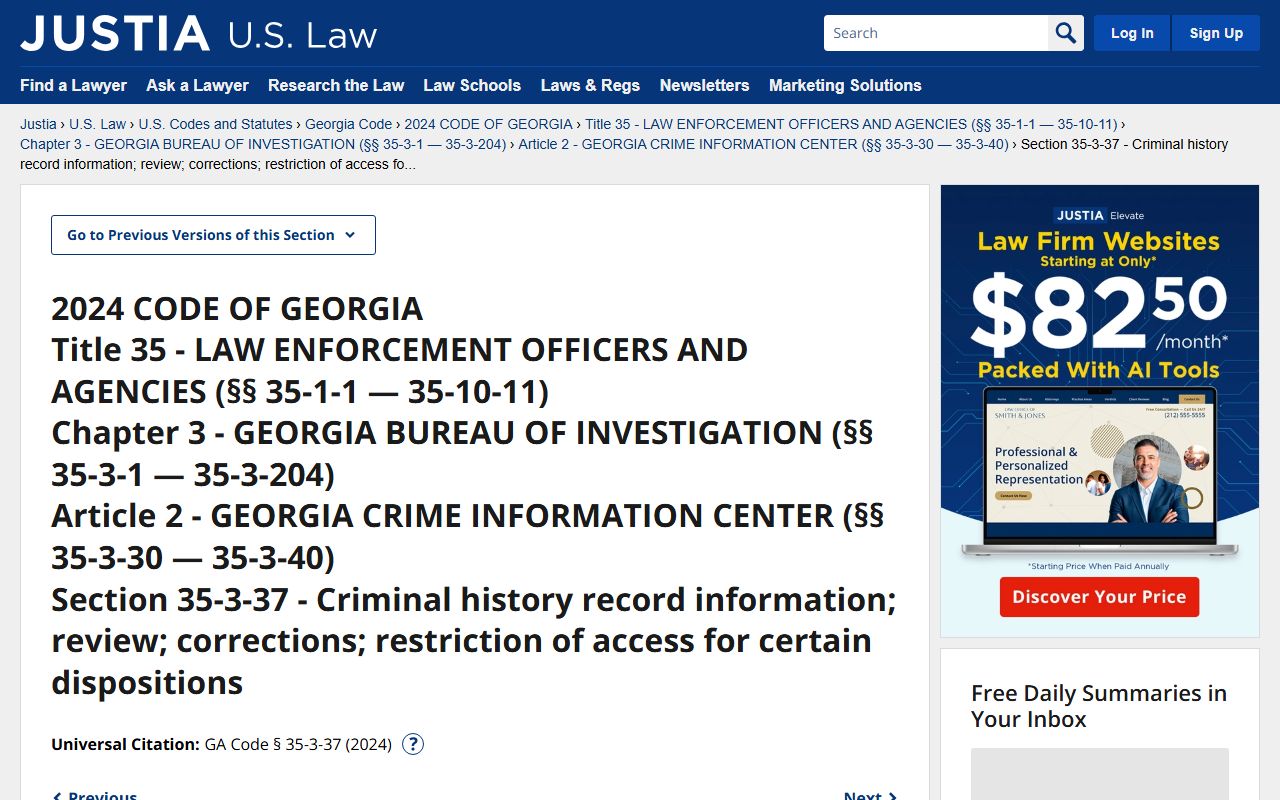
The statute helps define eligibility, but the local case record and prosecutor route decide the practical next step.
Public Access to Randolph Criminal Records
Georgia's Open Records Act supports access to public records unless an exception applies. O.C.G.A. 50-18-70 states the public-access presumption. O.C.G.A. 50-18-72 lists exemptions. Criminal case records also intersect with court sealing orders, juvenile confidentiality, personal-identifier redactions, ongoing investigations, and criminal-history restriction rules.
The Georgia Open Records Act presumption source is useful when asking why a public agency starts from disclosure rather than secrecy.
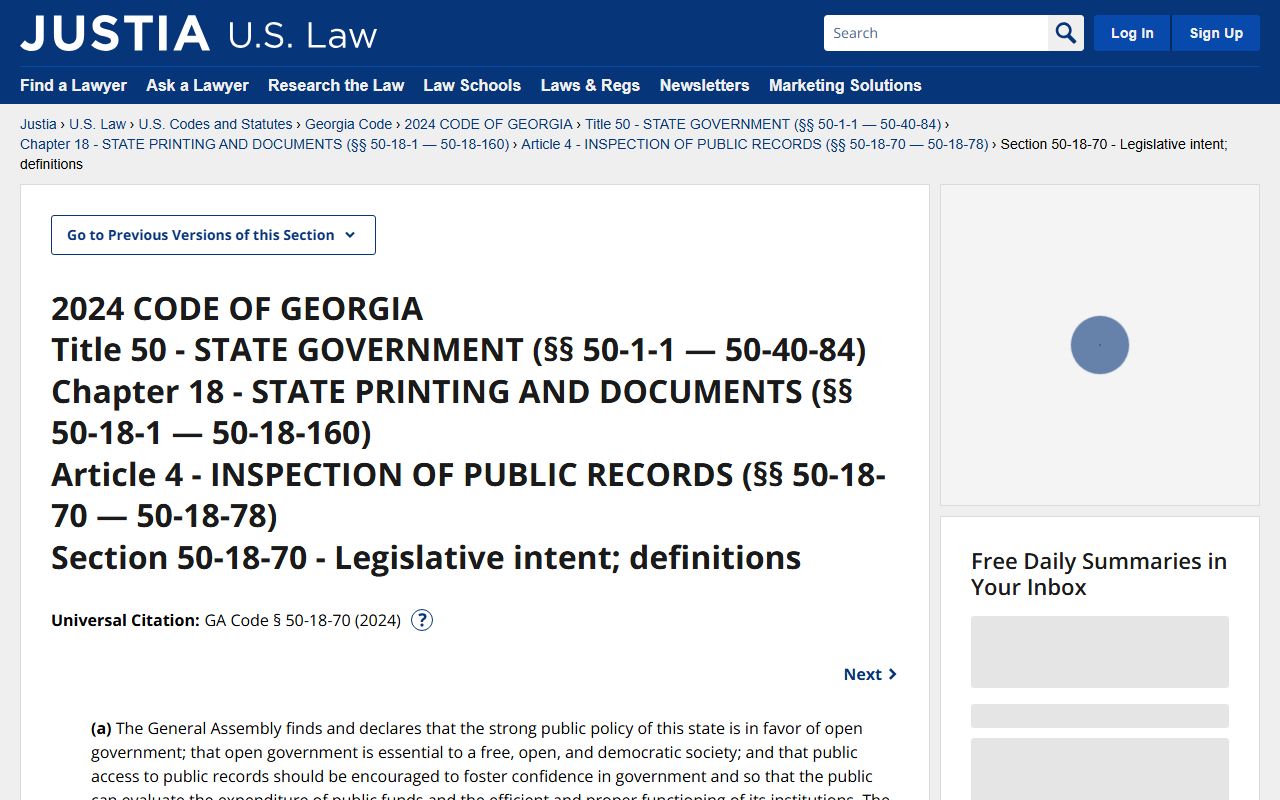
The presumption does not override juvenile, sealed, restricted, or privacy-protected criminal court records.
Important: Court-record lookups are not FCRA consumer reports and must not be used for regulated screening decisions.
Confidential Randolph Juvenile Matters
Juvenile criminal-like matters are not ordinary public criminal court records. GSCCCA says the Randolph Clerk of Superior Court manages Superior and Juvenile courts, but that does not make juvenile files open to public search. Juvenile delinquency, dependency, and law-enforcement records have stronger privacy rules. Parties, guardians, attorneys, court officials, law enforcement, and other authorized persons may have access where the law allows, but casual public lookup is not the right model.
The Georgia juvenile records confidentiality statute separates juvenile law-enforcement records from adult arrest records and limits public inspection.
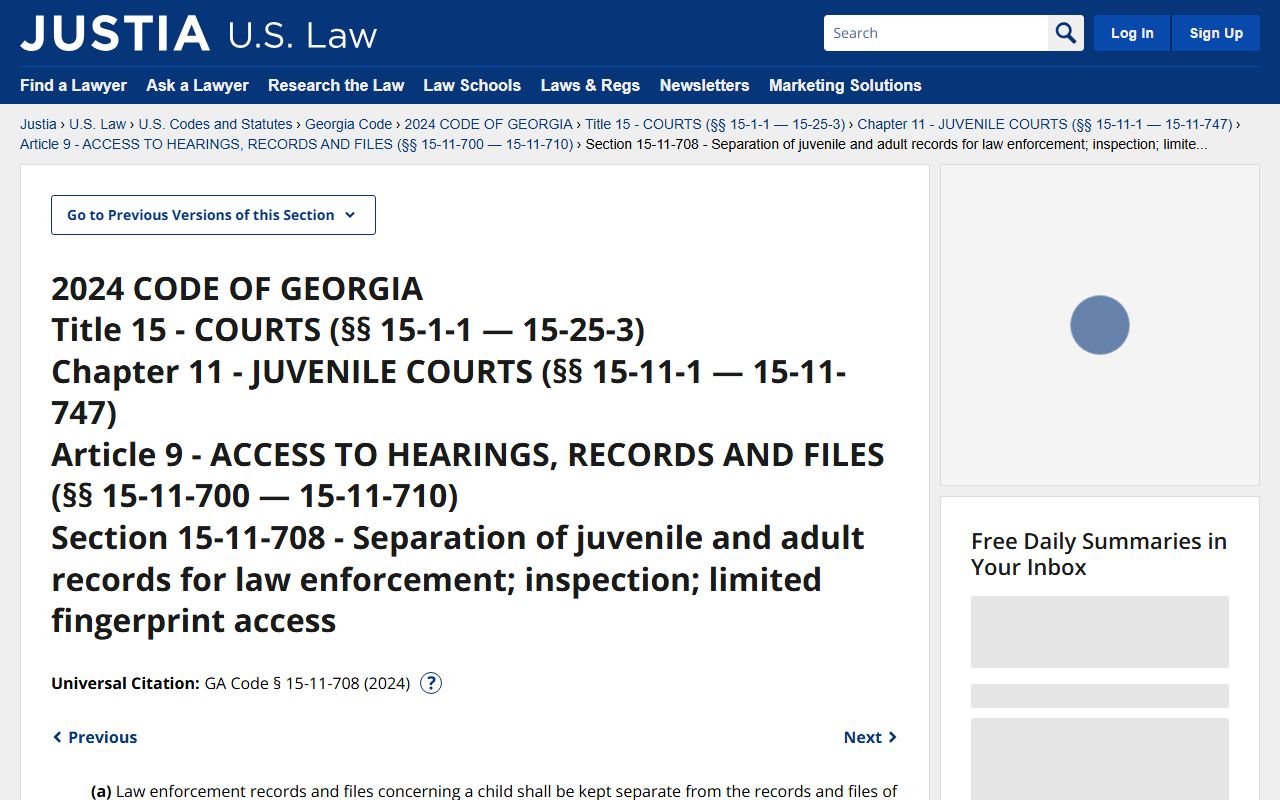
That rule is why Randolph juvenile case questions should go through the court or counsel rather than a public case search.